
Specialized Toolkit Series
Comprehensive procedural education. Practical guidance you can use in the OR.
AANA's Specialized Toolkits are comprehensive learning experiences that combine expert-led education, surgical videos, clinical resources and practical assessments into one streamlined program. Designed by leading Orthopaedic Surgeons and their care team, each Toolkit helps you strengthen procedural knowledge, refine surgical decision-making and apply best practices with confidence.
Browse Toolkits
What Is a Specialized Toolkit and Who Is It For?
Rather than searching across multiple resources, each Toolkit organizes everything you need to master a procedure into one structured learning experience.
Every Toolkit combines:
- Expert surgical videos
- Procedural pearls and technical guidance
- Clinical decision-making strategies
- Journal articles and evidence-based resources
- Rehabilitation and postoperative considerations
- Self-paced online learning

Whether you're learning a procedure for the first time, expanding your case volume or refining an established technique, Specialized Toolkits are designed for surgeons who want practical education they can immediately apply in practice.
What You'll Take AwayAfter completing a Toolkit, you'll be able to:
|
Ideal for:
|
ACL Reconstruction Toolkit
Master every phase of ACL Reconstruction – from preoperative planning through rehabilitation – with comprehensive education developed by leading Orthopaedic Surgeons.
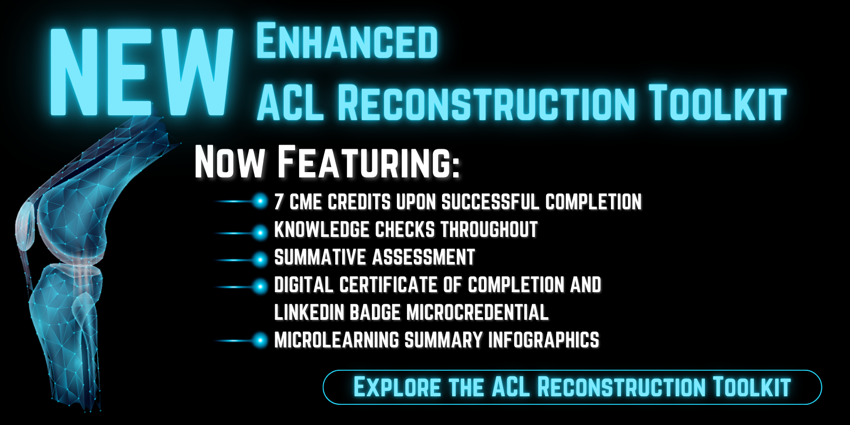
NEW Features
- 7 CME credits (upon successful completion)
- Knowledge Checks throughout the learning experience
- A Summative Assessment to reinforce comprehension
- A digital Certificate of Completion and LinkedIn badge microcredential
- Microlearning Summary Infographics for quick review and reinforcement
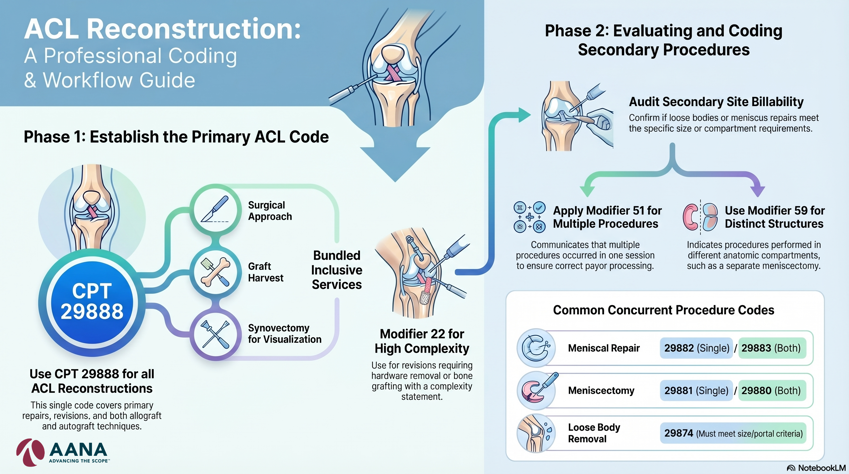
New infographics example
|
You'll Learn
|
Content Leads:
|
Explore the ACL Reconstruction Toolkit
About Certificates of Completion
The certificate of completion from the ACL Reconstruction Toolkit meets the standards set forth by the Institute for Credentialing Excellence. This certificate signifies your knowledge and competency associated with the Toolkit's learning objectives and educational components. This certificate demonstrates your clinical knowledge and competence to yourself, your employer and the entire care team, reinforcing your commitment to achieving consistently better patient outcomes.
Additional Toolkits
Continue Building Your Procedural Expertise
Explore additional Specialized Toolkits covering today's most relevant arthroscopic procedures.
New Pricing Available
Additional Specialized Toolkits are now available at a reduced price, making it even easier to expand your learning across multiple procedures.
Arthroscopic Hip Treatment Toolkit
Advance your approach to hip arthroscopy with in-depth guidance and procedural insights designed to optimize every phase of treatment – from preoperative planning to postoperative management.
|
You'll Learn
|
Content Leads:
|
Explore the Arthroscopic Hip Treatment Toolkit
Shoulder Instability
Designed to help you refine both operative and nonoperative techniques, the Shoulder Instability Toolkit provides guidance for managing complex cases, optimizing rehabilitation and improving return-to-sport outcomes.
|
You’ll Learn
|
Content Leads:
|